

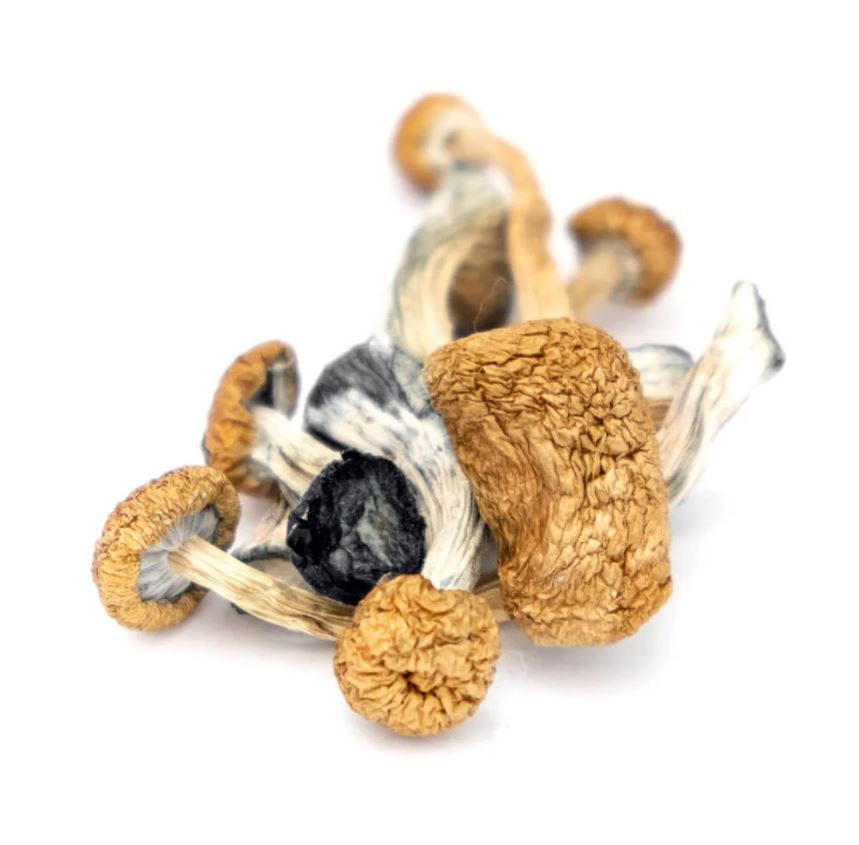
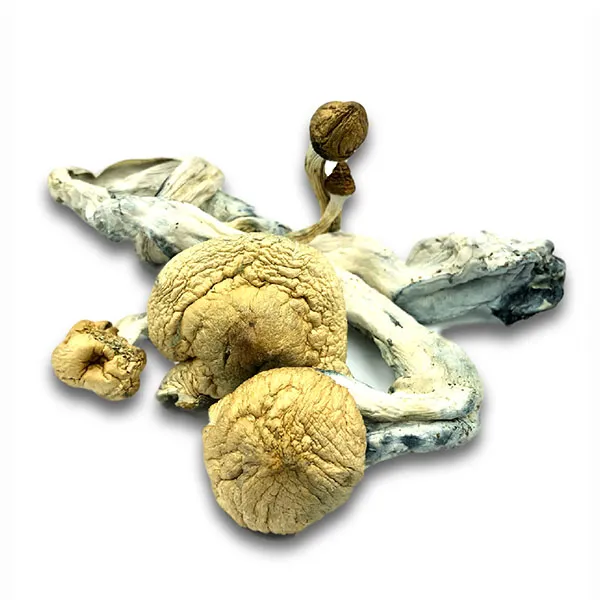
Golden Teacher mushrooms
Price range: $210.00 through $1,225.00
Golden Teacher mushrooms are a Psilocybe cubensis variety containing psilocybin, a naturally occurring psychedelic compound associated with changes in perception, mood, cognition, and sensory experiences.
Description
Buy Golden Teacher mushrooms Online USA , Canada
Golden Teacher is one of the best-known cultivated varieties associated with
Psilocybe cubensis. The name refers to a cultivated line within the
species rather than a separate fungal species. For microscopy and fungal
taxonomy enthusiasts, Golden Teacher is recognized for its characteristic
golden-colored caps and the microscopic features associated with
P. cubensis.
This page provides educational information about Golden Teacher, including
its taxonomy, history, observable characteristics, spore morphology, and
current scientific research. It is intended for microscopy, identification,
and academic research purposes.
What Is Golden Teacher?
Golden Teacher is a cultivated variety associated with
Psilocybe cubensis, a species of basidiomycete fungus. The species
itself has a formal taxonomic classification and is listed by the
National Center for Biotechnology Information (NCBI)
as Psilocybe cubensis.
It is useful to distinguish between a species and a cultivated variety.
Psilocybe cubensis describes the species, while Golden Teacher is
a name used for a particular cultivated line within that species.
Common names such as “gold cap” are less precise. A mushroom with a golden
cap does not automatically qualify as Golden Teacher because cap color
alone does not establish strain identity.
Species vs. Cultivated Variety
- Species: Psilocybe cubensis
- Variety name: Golden Teacher
- Common descriptions: Golden or amber-capped P. cubensis
- Research focus: Morphology, spores, taxonomy, genetics, and fungal chemistry
Golden Teacher Experience and Effects
- Golden Teacher is a well-known variety associated with Psilocybe cubensis. It has a long history within mushroom communities and is often discussed in connection with introspection, altered perception, and personal reflection.
- People describe the experience in different ways. Reported effects include changes in visual perception, heightened awareness of colors and sounds, altered time perception, emotional sensitivity, and a stronger sense of connection with surroundings. Some people also describe reflective or spiritual feelings during the experience.
- The experience is not identical for everyone. Mood, surroundings, individual sensitivity, previous experience, and the chemical composition of the mushroom all influence how someone responds.
- Golden Teacher is also associated with physical effects. Reported reactions include changes in body sensation, nausea, dizziness, increased heart rate, and coordination difficulties. Anxiety, confusion, or an uncomfortable psychological experience are also possible.
- The effects of psilocybin-containing mushrooms generally develop after ingestion and continue for several hours, with intensity changing throughout the experience. Exact timing varies between individuals and specimens.
- Golden Teacher should not be treated as a predictable or risk-free experience. Psilocybin remains a psychoactive substance, and its legal status differs between jurisdictions. People taking medications or living with certain psychiatric or cardiovascular conditions should seek qualified medical advice before considering exposure to psilocybin.
- For educational purposes, Golden Teacher is best studied through its taxonomy, morphology, chemistry, reported effects, and current scientific literature rather than through fixed claims about what every person will experience.
- Psychedelic2 provides this information for educational and research purposes. It is not medical advice and does not guarantee a particular psychological or physical response.
Golden Teacher History
The precise origin of Golden Teacher remains uncertain. Several stories
circulate within mushroom communities about its early history, including
accounts involving North America and other geographic locations. These
accounts are difficult to verify through primary historical documentation.
Golden Teacher subsequently became one of the most recognizable names
associated with cultivated P. cubensis. Its recognizable
appearance and widespread circulation helped create a substantial body of
community documentation over several decades.
Historical claims about the exact discovery location or original breeder
should therefore be treated as community history rather than established
scientific fact.
Why Golden Teacher Is Popular for Microscopy
Golden Teacher has several observable characteristics useful for
comparative microscopy. The mature cap commonly displays golden to
amber-brown coloration, while mature gills develop darker tones as spores
accumulate.
Microscopic examination provides additional information. Scientific
research examining P. cubensis has documented features including
dark spores and four-spored basidia. A published morphological study also
examined spores, cystidia, and basidia using optical microscopy.
See the peer-reviewed study:
Morphological and chemical analysis of magic mushrooms in Japan
.
Golden Teacher Identification Characteristics
Golden Teacher specimens commonly display the following macroscopic
characteristics. Natural variation occurs between specimens, so these
features should be considered descriptive rather than definitive proof of
strain identity.
| Feature | Common Characteristics |
|---|---|
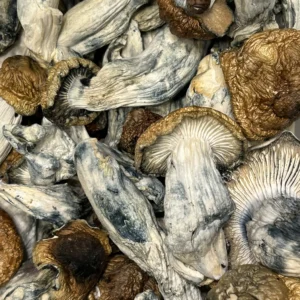
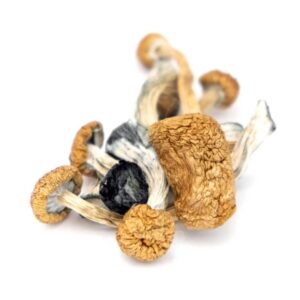
| Cap | Golden, yellow, amber, or warm brown coloration. Young caps are generally convex and become broader as they mature. |
| Stem | Generally pale or whitish, with variation in thickness and length between specimens. |
| Gills | Pale when young and progressively darker as spores mature. |
| Spore deposit | Typically dark purple-brown to purplish-black in concentrated deposits. |
| Bruising | Blue or blue-green discoloration may occur following physical damage. This feature is associated with several psilocybin-producing fungi and does not uniquely identify Golden Teacher. |
Golden Teacher Spores Under a Microscope
Spore morphology provides useful information when studying
Psilocybe cubensis. Researchers examining the species have
documented dark brown spores, hyaline cystidia, and four-spored basidia.
Individual spores are microscopic and require suitable optical equipment
for detailed examination. Their shape, surface, germ pore, and dimensions
provide additional characteristics for comparative fungal studies.
Commonly Described Spore Features
- Shape: Ellipsoid to subellipsoid.
- Surface: Generally smooth.
- Color: Translucent to lightly pigmented individually, with darker coloration in concentrated deposits.
- Germ pore: Present at the apical end.
- Basidia: Four-spored basidia are characteristic of P. cubensis.
For a visual reference, Wikimedia Commons hosts a microscopy image of
Psilocybe cubensis spores examined at 1000x magnification:
Psilocybe cubensis spores microscopy
.
Golden Teacher and Psilocybe cubensis Taxonomy
Scientific classification is important when discussing mushroom
varieties. NCBI lists Psilocybe cubensis as a species and provides
its taxonomic lineage through the fungal kingdom.
The current NCBI taxonomy record identifies the species as
Psilocybe cubensis (Earle) Singer and records
Stropharia cubensis Earle as its basionym.
Researchers should therefore distinguish formal taxonomic terminology
from names used within mushroom communities.
Golden Teacher Compared With Other P. cubensis Varieties
Golden Teacher is frequently compared with other cultivated
P. cubensis varieties. Names used by mushroom communities do not
always correspond to formal taxonomic classifications, and observable
characteristics vary between specimens.
| Variety | General Research Interest |
|---|---|
| Golden Teacher | Comparative morphology, microscopy, spore study, and fungal chemistry. |
| B+ | Comparative morphology and observational microscopy. |
| Penis Envy | Comparative morphology and genetic or chemical research. |
| Tidal Wave | Comparative studies involving cultivated P. cubensis lines. |
| Blue Meanie | Useful as an example of why common names require careful taxonomic interpretation. |
Potency rankings between named varieties should not be treated as fixed
scientific measurements. Chemical composition varies between genetics,
specimens, environmental conditions, and analytical methods.
Golden Teacher in Modern Scientific Research
Modern research increasingly examines psilocybin-producing fungi at the
chemical and molecular level. Researchers are studying more than
psilocybin and psilocin, with metabolomic approaches revealing a broader
range of fungal compounds.
A 2025 study published in Scientific Reports analyzed 42
psilocybin-producing fungal strains across nine species. The researchers
identified a putative hydroxypsilocybin compound in
Psilocybe cubensis Golden Teacher.
The study demonstrates the value of metabolomic analysis when examining
differences between psilocybin-producing fungal strains.
Recent Research Into P. cubensis
Scientific interest in P. cubensis extends beyond taxonomy.
Researchers are examining its chemistry, biological activity, morphology,
and interactions between different fungal metabolites.
A recent peer-reviewed study used multiple analytical techniques to
investigate the physicochemical characteristics of P. cubensis,
including microscopic and chemical examination.
Why Scientific References Matter
Online mushroom terminology often mixes scientific names, cultivated
variety names, historical claims, and community terminology. Using
primary literature and recognized scientific databases provides a more
reliable way to separate documented information from anecdotal claims.
NCBI provides a useful starting point for checking the formal taxonomic
status of P. cubensis. Peer-reviewed publications provide
additional information about morphology, chemistry, and fungal biology.
Psychedelic2 recommends consulting scientific literature when making
research or identification claims rather than relying solely on
commercial descriptions or community terminology.
Frequently Asked Questions
Is Golden Teacher a species?
No. Golden Teacher is a cultivated variety associated with
Psilocybe cubensis. The species is P. cubensis.
What does Golden Teacher look like?
Golden Teacher is commonly associated with golden to amber-colored
caps, pale stems, darkening gills, and dark purple-brown spore deposits.
Individual specimens vary.
Are Golden Teacher and gold cap the same?
No. “Gold cap” is an informal descriptive term and does not establish
Golden Teacher identity.
What do Golden Teacher spores look like?
Spores associated with P. cubensis are generally smooth and
ellipsoid to subellipsoid, with an apical germ pore. Concentrated spore
deposits commonly appear dark purple-brown.
Is Golden Teacher useful for microscopy?
Golden Teacher is frequently used as a reference subject in microscopy
communities because of its recognizable association with
P. cubensis and its observable macroscopic and microscopic
characteristics.
Does blue bruising prove a mushroom is Golden Teacher?
No. Blue or blue-green bruising is not unique to Golden Teacher and
should not be used by itself to establish identity.
Is Golden Teacher the most potent P. cubensis variety?
There is no reliable universal potency ranking for named cultivated
varieties. Chemical concentrations vary between specimens and growing
conditions, and laboratory measurements provide a stronger basis for
comparison than community claims.
Has Golden Teacher appeared in peer-reviewed research?
Yes. A 2025 study in Scientific Reports analyzed 42
psilocybin-producing fungal strains and specifically reported a putative
hydroxypsilocybin compound in Psilocybe cubensis Golden Teacher.
Research References
NCBI Taxonomy: Psilocybe cubensis
Scientific Reports: Comprehensive analysis of 42 psilocybin-producing fungal strains
ScienceDirect: Morphological and chemical analysis of magic mushrooms in Japan
PubMed Central: Multianalytical investigation of Psilocybe cubensis
Wikimedia Commons: Psilocybe cubensis spores under microscopy
Research Use
Golden Teacher is best understood as a recognized cultivated variety
associated with Psilocybe cubensis. Its long history within
mushroom communities, recognizable morphology, and appearance in modern
fungal research make it a useful subject for educational microscopy and
comparative fungal studies.
For accurate identification, researchers should compare multiple
characteristics and consult current taxonomic literature. A commercial
strain name or a single visible feature is not sufficient to establish
formal fungal identification.
Additional information
| Quantity | Ounce, 1/4 P, 1/2 P, p |
|---|
11 reviews for Golden Teacher mushrooms
Related products
-
- Magic mushrooms
Blue Meanie mushroom
- Price range: $199.00 through $1,300.00
- Select options This product has multiple variants. The options may be chosen on the product page
-
- Magic mushrooms
Albino Penis Envy
- Price range: $220.00 through $1,199.00
- Select options This product has multiple variants. The options may be chosen on the product page
-
- Magic mushrooms
B+ mushroom
- Price range: $200.00 through $1,200.00
- Select options This product has multiple variants. The options may be chosen on the product page
Francesco F –
The order was processed quickly, the packaging was discreet and everything arrived exactly as expected. Communication was also good throughout.
Michelle –
speedy delivery, discreet and easy to grow!! will definitely shop here again.
Svetoslav –
I am very happy with everything- delivery time, product quality and .. Definitely will order again.
Darius 0 –
This is the third time I have ordered GT.
Fast delivery and really fast first flush.The first mushrooms appeared after about four days and they were ready to be picked up on the sixth. 13 grams dry in the first flush, and I’m still waiting for the second one.
Happy. Definitely ordering again.
Malaika H –
Must compliment the customer service, very quick answers and helpful tips! The delivery was quick and the kit is really easy use
Shayan –
I tried so many mushrooms,so I can say Golden Teacher is one of the best mushrooms
Hope –
Very reliable and discrete delivery, I highly recommend their services.
Myco –
can say that I’m very satisfied with the kit and I’ll be back to try other mushrooms ☺️ I highly recommend it.
Ralph –
Ended up with some really big boys, couldnt recommend it more! Good stuff as usual.
Roison P –
Everything worked very easily according to the instructions and the mushrooms were very nice. Highly recommend!
Harry Rivers –
Really straightforward service. No complications with the order and it arrived within the expected timeframe. I also liked that the packaging didn’t draw attention to what was inside.